- Blog
- February 25, 2026
The Next Bike Industry Trend Isn’t 32″ Wheels

Jared Kukura
Executive BIkefisher
It’s easy to see why 32-inch wheels are thought of as the next big trend for the bike industry. There are headlines everywhere hyping up the potential benefits, or lack thereof, of 32-inch wheels. The larger diameter wheels represent a slight step forward in innovation and another search for profit in what everyone acknowledges is a struggling industry.
Many bike companies disappeared in recent years. The trifecta of COVID, tariffs, and the tendency for profit rates to decline decimated a significant portion of the bike industry. The surviving companies struggle to maintain high revenue and low costs.
“Normal” people don’t have the money to increase corporate revenue. “Normal” people have low wages and high living expenses. 32-inch wheels don’t offer much, if anything, to a “normal” person who rides bikes. The main purpose of this new wheel size is to capture a portion of the high-earner market.
Big bike brands also eliminated significant portions of their labor force, and use AI in a feeble attempt to close the gap. The poorly generated AI marketing copy is apparent to all of us at this point, but I guarantee these companies push AI internally to plug holes in their day-to-day processes that we don’t see.
Combine the AI slop with marginal, expensive technological innovations, and it’s apparent why most people who enjoy bikes and bike culture are dissatisfied with a significant portion of the bike industry. I see this dissatisfaction creating a new trend in the bike industry: authenticity.

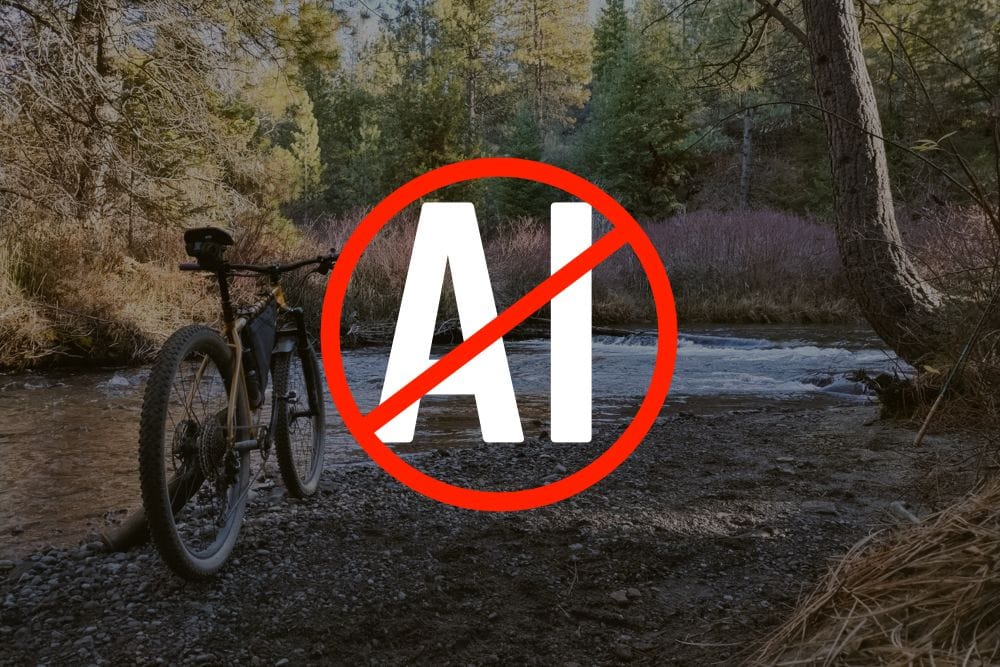
I consider Bikepacking.com and The Radavist to be two of the biggest alt-biking websites. Both websites published commitments to their readers that they would not use AI to generate content. They understand that humans want original thoughts and stories from humans. People do not want stolen and poorly rehashed content.
Bikepacking.com, The Radavist, and several bike brands, most notably the Minnesota-based QBP family, also published content that was emphatically political and anti-ICE. Historically, I considered any political content coming from bike companies to be fairly mild.
It’s not difficult to find articles bemoaning the selling off of public lands or the implementation of tariffs. But criticizing those political actions has mild consequences. Criticizing violent government action is often met with violence and should not be considered mild.
This is a shift in authenticity, in my perspective. The people behind these companies are human, and they are using their platforms to convey their genuine human emotions. I noticed the same trend in the bike industry’s content creators.
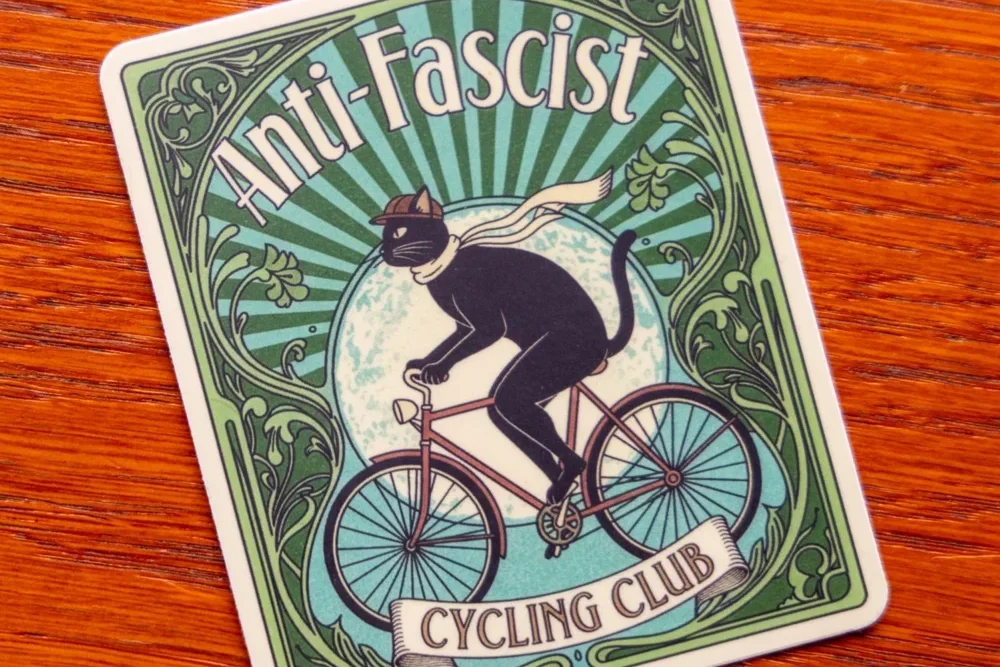
For example, Tim Fitzwater is an alt-biking YouTuber introduced to me through a sterile, corporate attention-grabbing process. I discovered him selling anti-fascist stickers and telling fascists to fuck off. His willingness to express himself is something I haven’t seen in the past.
I’m also working on my Cheap Bike Build Off as I write. I’m watching Max the Mullet Mechanic bike build videos for inspiration. I enjoy watching people build old bikes, but I think he sets himself apart with his authenticity. He wears anti-Trump shirts, peels derogatory words off bike stickers, and tells his audience to eat a bag of dicks if they don’t like him talking about politics.
I routinely watch Probably Riding videos during my Saturday morning coffee. I watched a Probably Riding video in which he voiced his love for Rivendell bikes and his respect for the company founder’s willingness to discuss politics. But he was disappointed that the Rivendell founder was silent on the Gaza genocide.
A sincere moment like that inspires a connection to a random British person riding his bike through South Korea. His video style is one of the most imitated on the platform due to his authenticity.
He delves deeper than politics, too. He shares his experiences as a new father. Many people who like bikes are parents. Many parents are also concerned about the atrocities perpetuated by various countries right now.
I think there are lots of people like me. We like bikes, but we have other interests, thoughts, and concerns. We gravitate towards brands and creators that share their authentic human selves.
I won’t be surprised if big bike brands pivot away from AI and marginal technological innovation as their profit rates continue falling. People aren’t dumb, though. I don’t see large corporations being able to replicate the authenticity we see with smaller companies and creators.