- Gear Reviews
- January 28, 2026
Ritchey Ultra Review

Jared Kukura
Executive BIkefisher
The Ritchey Ultra is a steel hardtail mountain bike frame with a three-decade legacy. Ritchey says the frame “occupies a unique ride space from cross-country riders looking to get rowdy and go big to enduro riders lusting for some all-mountain shredding.”
I put hundreds of miles on my Ritchey Ultra frame that I built up at the beginning of 2024. The frame ticked many boxes on paper, but, as someone who dreads overspending on gear, I always had a thought in the back of my mind that I could be paying a premium for vibes.
Ultimately, I found the vibes and performance worth the premium. Albeit the best version of the Ritchey Ultra for me isn’t what I initially thought it would be.
Frame Specs and Geometry
- Material: Heat-treated, triple-butted Ritchey Logic steel tubing, TIG welded
- Cable routing: Fully external for shift and brake hoses, internal routing for dropper post
- Fork: Designed for a 120mm suspension fork or a 500mm axle-crown rigid fork
- Bottom bracket: 73mm BSA
- Rear axle: Boost spacing, 12x148mm
- Max chainring size: 38t single, 26/36t double
- Chainline: 52mm
- Max tire size: 27.5×2.8, 29×2.4
- Weight: 2,380g in size M

Initial Thought Process
As I mentioned, the Ritchey Ultra ticked many boxes for what I wanted in a new bike. I was interested in a steel hardtail frame that I could build up to complement my Surly Grappler. I wanted a versatile frame that could function as a typical mountain bike for singletrack and as a gravel bike for unmaintained forest roads.
The frame needed to clear at least a 29×2.3 tire and fit a fork in the 120-140mm range. I also wanted to build up a bike with relatively conservative geometry due to some back issues and because pedaling is more important to me than descending.
Build Specs
- Frame: Ritchey Ultra, size L
- Fork: Fox Rhythm 130mm
- Stem: 60mm or 35mm
- Handlebars: Salsa Rustler, 20mm rise, 750mm width or PNW Range, 38mm rise, 800mm width
- Grips: PNW Loam
- Dropper Post: TranzX Kitsuma, 150mm
- Wheels: Shimano Deore, Microspline
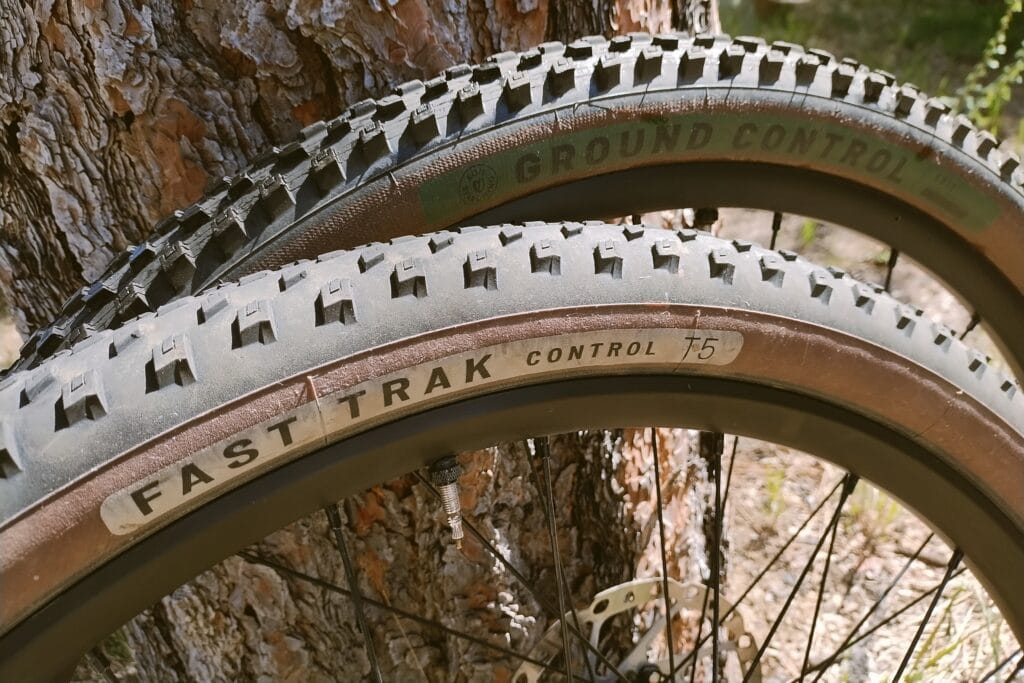
- Tires: Specialized Ground Control 29×2.35 (F), Specialized Fast Trak 29×2.35 (R)
- Brakes: Shimano SLX, 2-piston
- Rotors: Shimano Centerlock, 180mm
- Shifter: Shimano Deore, 12-speed
- Rear derailleur: Shimano Deore, 12-speed
- Cassette: Shimano SLX, 10-51t
- Crankset: Shimano SLX, 170mm, 30t
- Pedals: Shimano SPD clipless


Ride Impressions
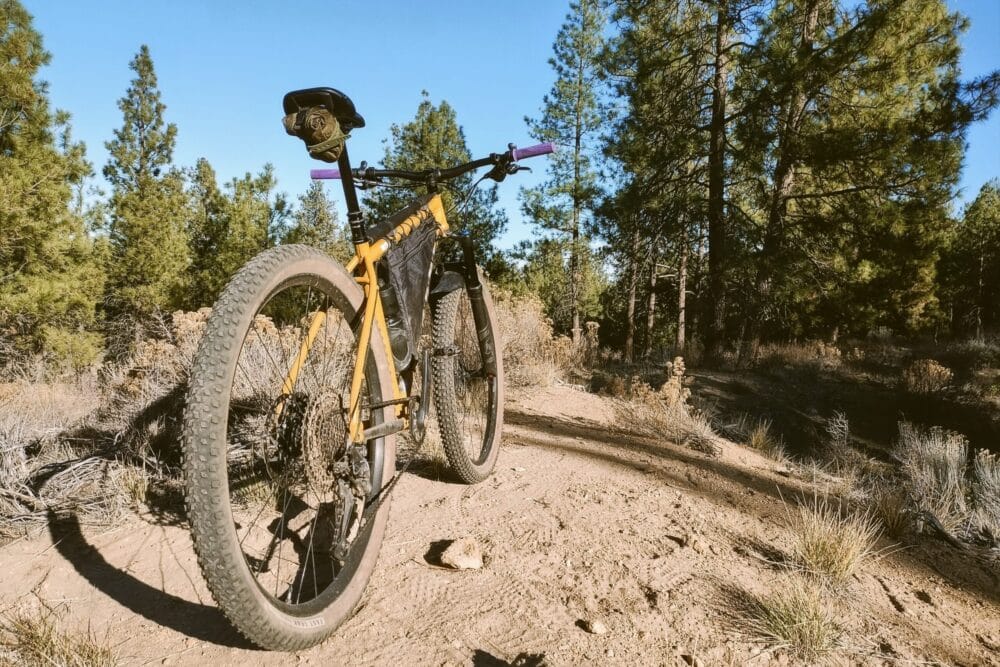
I initially built up the frame with a 120mm suspension fork, 60mm stem, and 750mm Salsa Rustler wide bars. I also ran Specialized Fast Trak 29×2.35 tires in the front and back. It was an XC-oriented build that I envisioned would cover all my bases.
This build felt too low and stretched out in the front despite the shorter reach on the frame. I also washed out the front wheel easily in dusty corners.
I decided to overhaul the bike’s front end. I switched to a 35mm stem and 800mm wide PNW Range handlebars with 38mm of rise. I bumped the fork up 10mm with a 130mm Fox Rhythm. I also changed the front tire to a Specialized Ground Control 29×2.35.
These changes made the bike a light-duty singletrack trail bike. I found I didn’t compromise much pedaling to and from trails with the more aggressive setup.

The bike is delightful on singletrack with this setup. The grippier front tire lets me corner with confidence. Lifting the front wheel is easy with the short reach and high stack. The wide bars give me tons of leverage pedaling up hill and let me turn the front end smoothly in tight switchbacks.
I can easily move my body around on the bike because of the frame’s conservative geometry. I know many people like the feeling of being “in” the bike. I personally don’t care for it when I’m on singletrack.
I switch up my cockpit and run the longer stem with narrower bars in the shoulder seasons when trails are muddy or for all-day rides when I know I’m not going to do much singletrack. I found the addition of inner bar ends works wonders on endless forest roads.
Bikefishing
I found that the Ritchey Ultra works best for bikefishing adventures that prioritize biking over fishing. The more aggressive, trail-focused cockpit setup works well when I’m riding higher elevation singletrack, and I want to extend my snack breaks with a few casts in nearby creeks. I can soak up miles on forest roads en route to farther fishing destinations with the XC-oriented configuration.
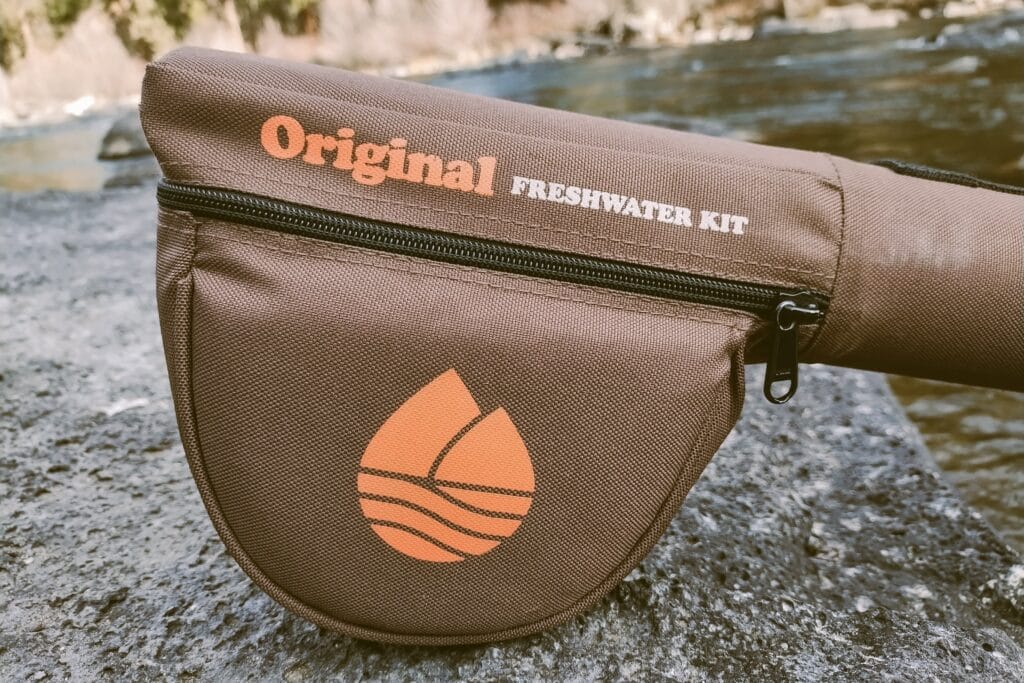
My typical bikefishing setup for the Ritchey Ultra includes a tenkara rod strapped to the top tube with my fishing gear, a water filter, snacks, and sunscreen in the frame bag. The wedge-style frame bag lets me run a 26oz water bottle along the seat tube and a 1L collapsible water bladder in the bag.
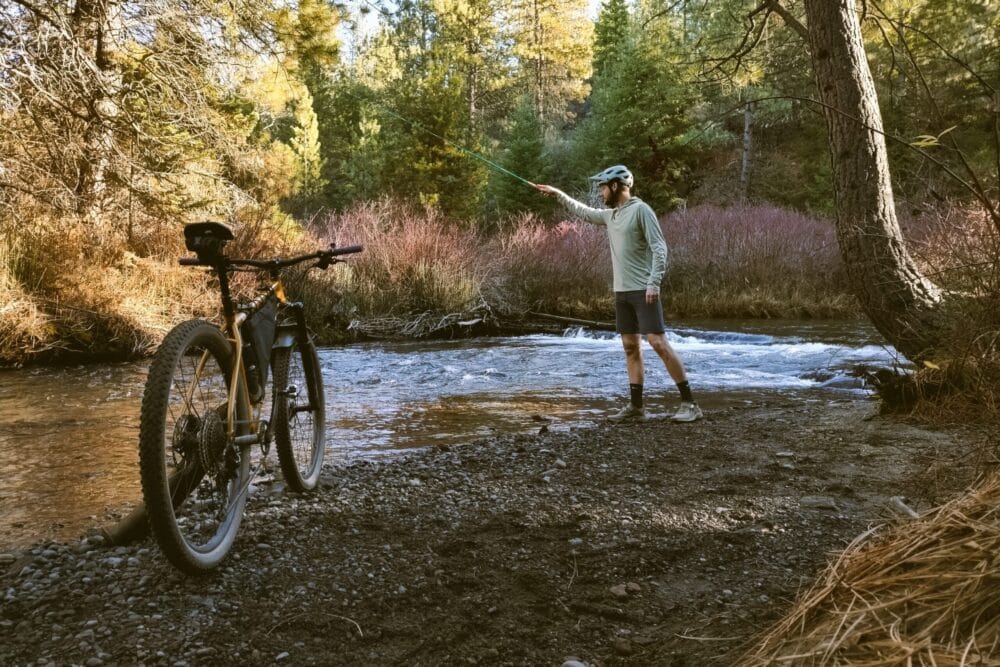
It’s definitely on the lightweight side of the packing spectrum, but it encompasses everything I typically use for bikefishing, minus the net and fly rod. My Tenkara Rod Co. Sierra rod is 20 inches collapsed and fits perfectly on the tube top of a size L Ritchey Ultra frame. My 7-foot, 3-weight fly rod breaks down to 21 inches, which is just a hair too long for the short reach.
I can theoretically strap the fly rod to the side of the top tube without any issues, but I prefer to keep a fly rod in a hard case on the bike to protect the guides. A rod case strapped to the side of the top tube can cause thigh clearance issues, which is why I typically use that setup for short rides.
I plan to experiment more with a fly rod packing setup in the future, though. I may strap the rod case under the downtube without fork clearance issues.
Aesthetics
I love the modern, yet classic look of the steel Ritchey Ultra frame. The kink at the top of the downtube near the head tube doesn’t do it for me, but I do like the subtle bend at the back of the seat stays.
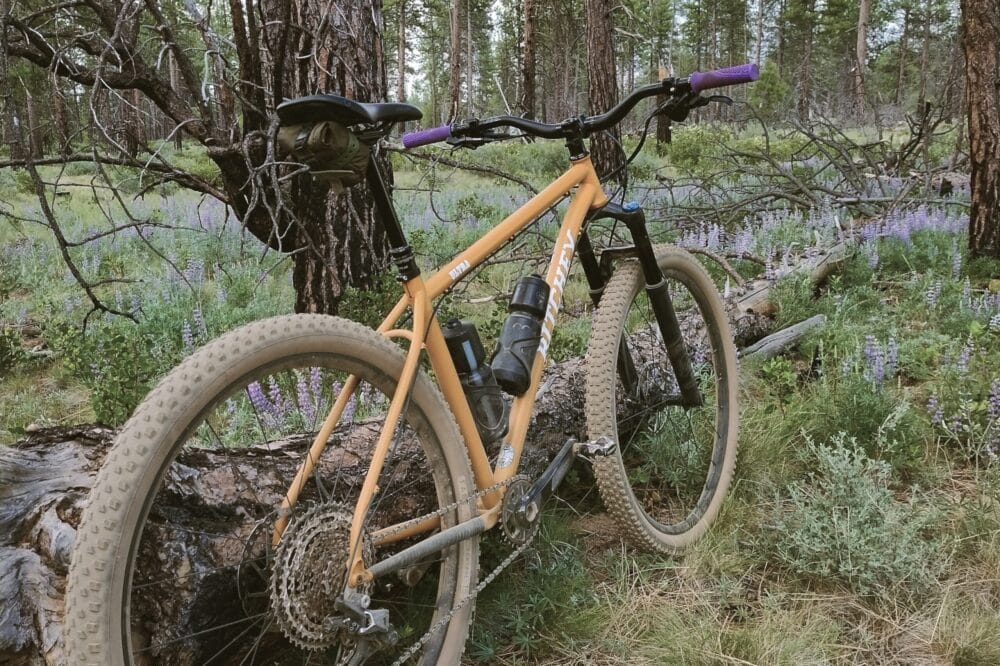
I also love the paint job. I was aghast when a neighbor said that they saw me on a yellow bike. It’s not yellow. It’s honey mustard.
I feel like I made the wrong choice in accessory colors. The best accessory color for this bike is black. I went for color with some parts, and I don’t think it worked.
I don’t think tan wall tires complement the honey mustard frame. My next set of tires is all black. I’m sure the black tires will look like tan wall tires once I get the summer dust on them, but they’ll look nice for one or two rides after the bike gets washed.
The purple grips are a bit too much of a contrast. My oldest son helped me pick the color, so I can always blame him. I should get black grips once they wear out, but I may actually get drab olive grips if I keep my drab olive seat bag.
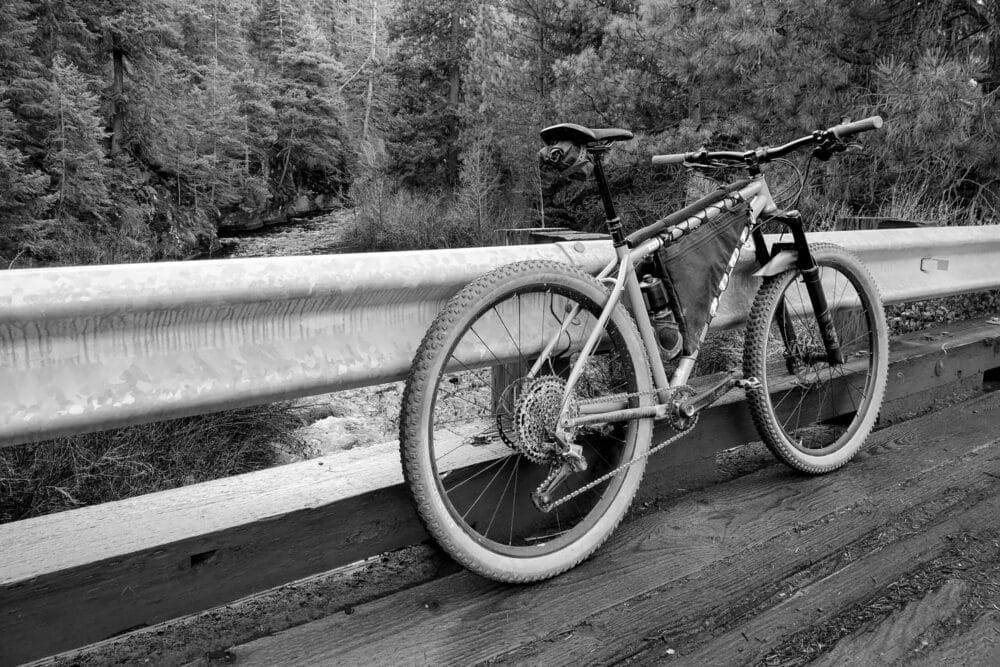
I don’t think the seat bag fabric color I chose is as bad as the purple on the grips. But the black frame bag color looks better with the frame color.
Issues
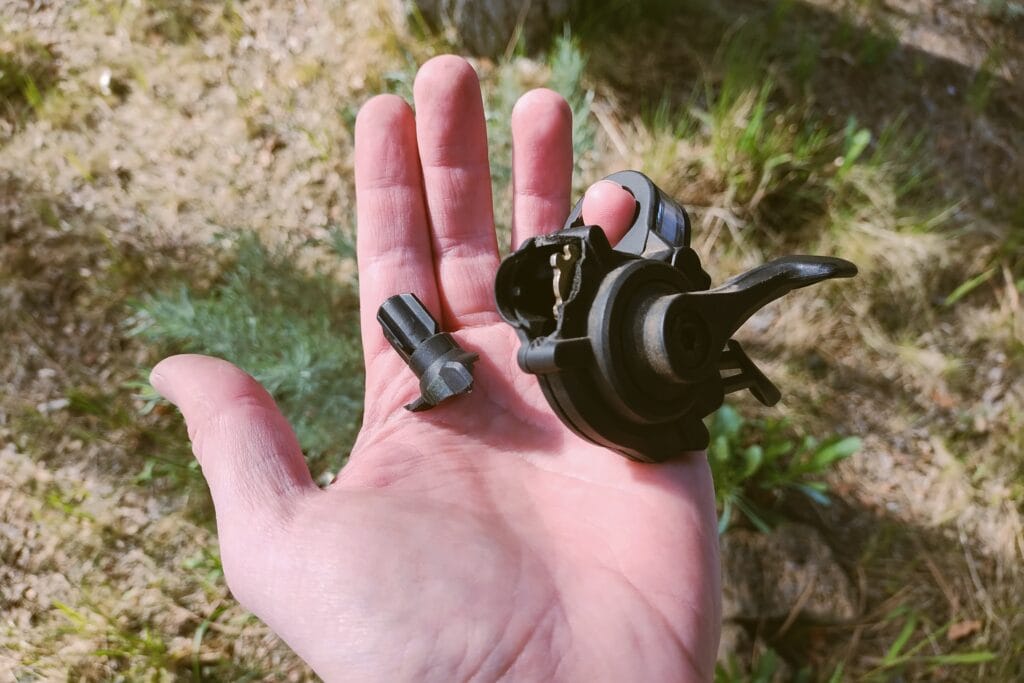
The dropper post slipping down the seat tube has been a source of frustration for me. I stripped the original seat post collar bolt after tightening and loosening it an absurd number of times.
I’ve tried everything and can’t quite get the post not slip. I flipped the seat post collar to the other side of the seat post and even added carbon paste.
The dropper post doesn’t slip much anymore, but I still need to adjust it sometimes. I’m sure the problem is all my making, and I’m not torquing the seat post collar correctly, but I haven’t encountered this much slippage on other frames before.
The only other issue I encountered was the routing for the rear brake hose. The Ritchey Ultra’s rear brake hose routing has a tight bend between the seat and chain stays, requiring an adjustable brake caliper and hose junction.
I learned about this requirement the hard way. The Shimano Deore brakes I bought for my original build didn’t fit on the frame. I ended up going to Shimano SLX to get the feature.
It wasn’t a big deal, but I wish I had known about that requirement before I bought parts.
Final Thoughts
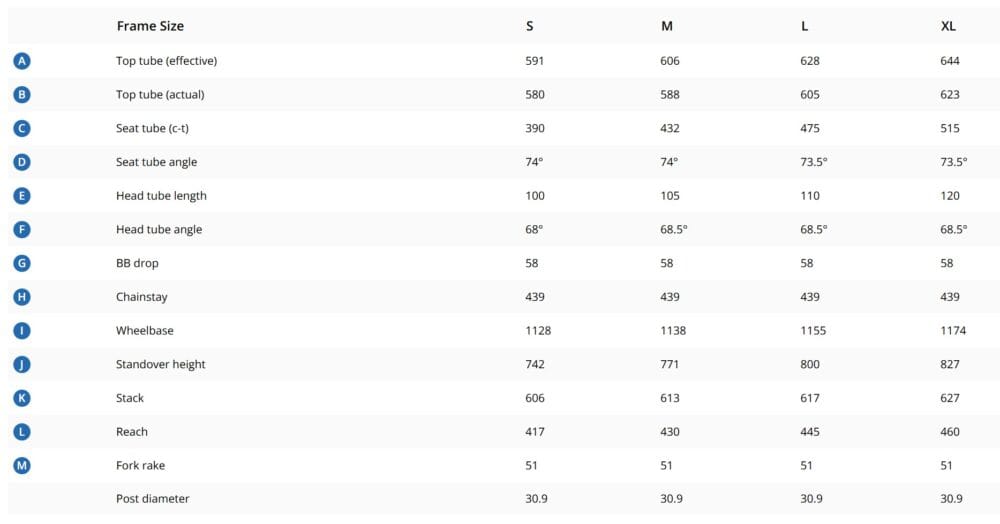
I think many people would scoff at Ritchey’s claim that the Ultra is meant for “all-mountain shredding” when looking at the geometry chart. And I thought I was getting the frame because I wanted a versatile, albeit XC-oriented hardtail.
I can confidently say that I enjoy the frame for trail riding more than all-purpose riding. I always thought that if I added another bike to my stable, I would add a burly mountain bike that would relegate the Ritchey Ultra to gravel duty. If anything, I now think I would keep the Ultra in its trail configuration and get something else for all-day forest road grinding.
Aside from a few aesthetic tweaks mentioned above, I may also want to try out a rigid carbon fork at some point. I think the addition of a lightweight, rigid fork and a 34t or 36t chainring would make a fun flat bar gravel bike.
Share this
Read More
- All Posts
- Bikefishing 101
- Blog
- DIY Guides
- Gear Reviews
- Quests